Author: Andrew Baird
“A marine biologist is never on holiday”
— James Bond, the Spy Who Loved Me (1977)
I have just returned from a trip to the Mentawai Islands in West Sumatra, Indonesia, in October 2025. The Mentawai Islands are one of the premier surf destinations in the world with numerous world class waves scattered throughout an archipelago made up of four main islands. The population density is relatively low, and the islands are generally small with minimal development. Agriculture or large rivers are also limited, so land based sources of stressors for the coral reefs are few. Forty years ago the reef must have been magic.
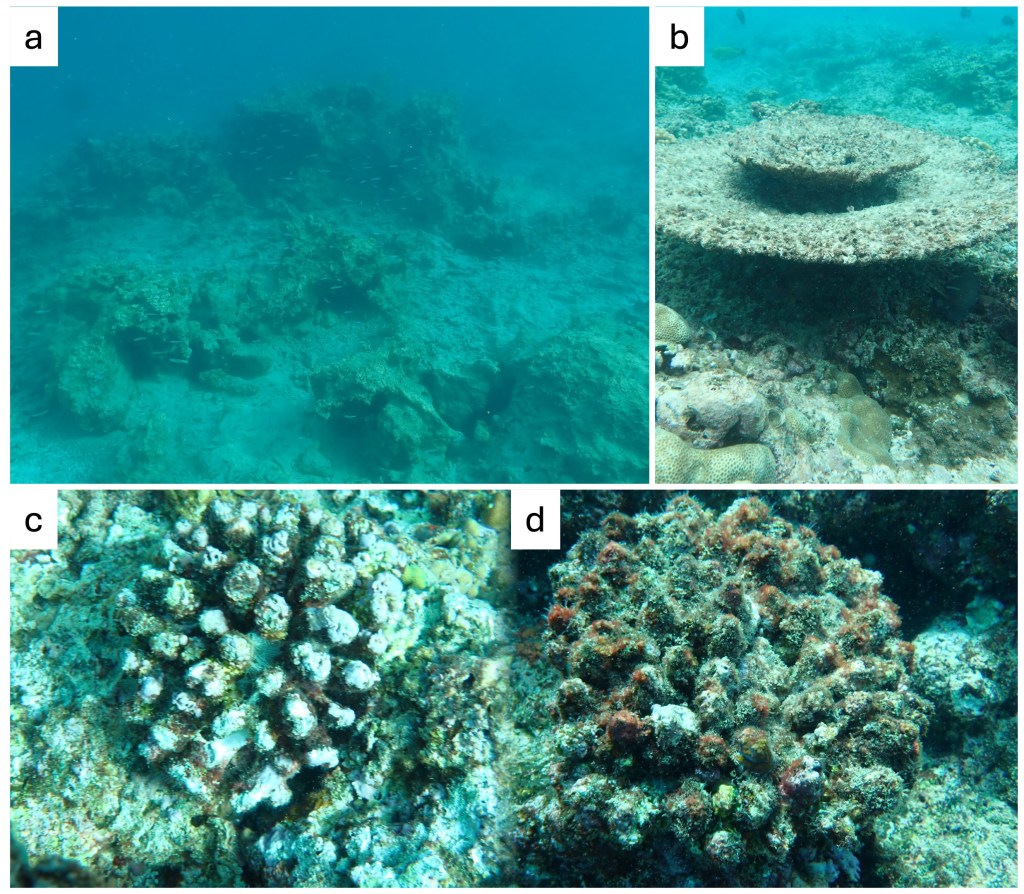
But few places on earth are now free from the effects of climate change. Indeed, the reefs I saw on the southern and northern coast of Pulau Sipura were uniformly in bad shape. Coral cover was consistently less than 10% and there were large numbers of dead standing corals, mostly Acropora and Pocillopora. The state of fouling suggests most of the coral mortality occurred at least 3 years ago and possibly even earlier. Possible sources include marine heatwaves in 2010 and 2016. At some sites, such as the reef of the foreshore of Tuapejat, the reef matrix is crumbling apart (Figure 1). Indeed, it almost looks as if some sections of the reef have been bombed.
The general devastation was relieved by the occasional patches of abundant Montipora and Heliopora and at some sites there were several Acropora recruits (Figure 2). In terms of present potential threats, I saw one crown of thorns starfish, one incidence of black band disease, and little in the way of plastic on the reef, despite plastics and other rubbish choking the waterways on land.
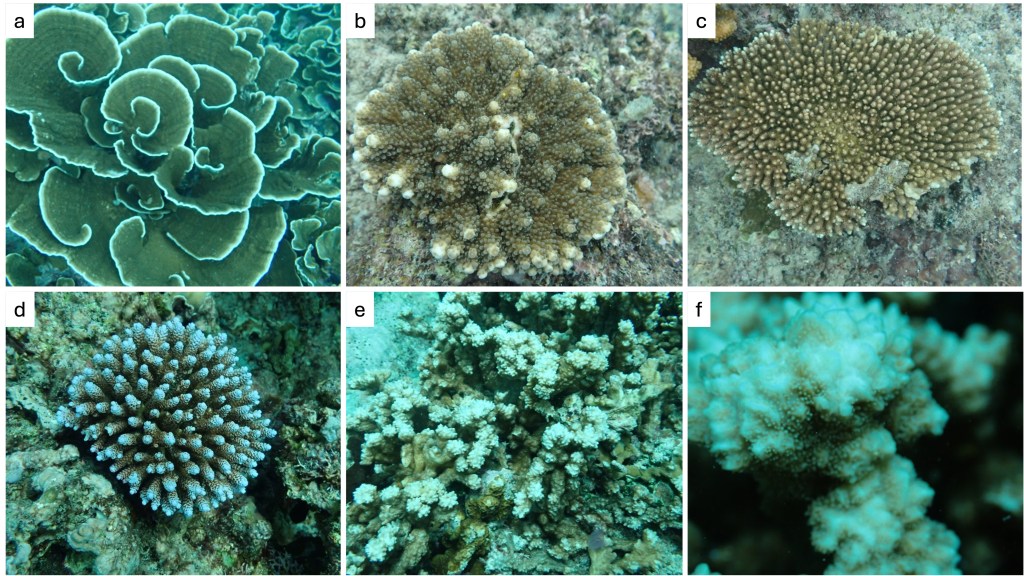
Despite the generally scrappy reef condition, I managed to photograph about 90 morpho-species at 8 sites around the island. The coral fauna has clear affinities with that of Aceh to the north, including several yet to be described species that appear to be endemic to the west coast of Sumatra (Figure 2).
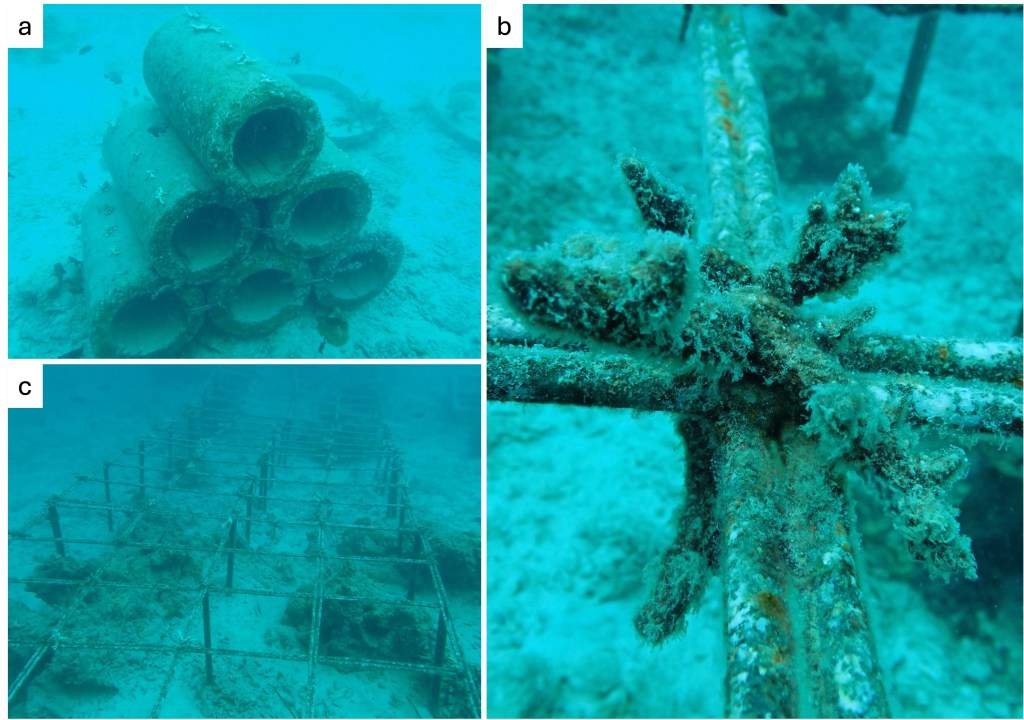
The provincial government’s tourist department has made at least one attempt at a reef restoration project at Tuapejat. This consists of a series of concrete pipes and large metal frames placed on the sand on the reef slope with coral fragments cable tied to the surface of these structures (Figure 3). Many of these fragments were already dead and the others are likely to die soon given the state they were in.
 Project Phoenix