Discover behind-the-scenes stories about selected corals by our members.

Acropora kalindae Crosbie, Baird, Bridge & Rassmussen, 2025
Author: Augustine Crosbie Nominal species: Acropora kalindae Crosbie, Baird, Bridge & Rassmussen, 2025 Not every species discovery begins with exploring the unknown. Sometimes it begins with realising that something familiar is not what it was thought to be. The newly described species Acropora kalindae Crosbie, Baird, Bridge & Rassmussen, 2025 described in Rassmussen et al. (2025) was for decades mistakenly called Acropora…

Acropora tersa Rassmussen, Bridge & Baird, 2025
Author: Sage Rassmussen Nominal species: Acropora tersa Rassmussen, Bridge & Baird, 2025 Meet Acropora tersa, a coral that you may already know. This newly described species has been hiding in plain sight for years on the Great Barrier Reef (GBR) and across much of the western Pacific, often mistaken for its close relative, A. hyacinthus. Its journey to a formal…
Leptoseris amitoriensis Veron, 1990
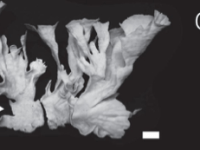
Author: Andrew Baird Nominal species: Leptoseris amitoriensis Veron, 1990 This note outlines some excellent detective work conducted by a group of Japanese coral scientists (Fujii et al. 2018) to establish that fragments of the holotype of Leptoseris amitoriensis Veron 1990, which was thought to be lost, do indeed exist. In addition, like many of these notes, there is…
The Montipora spp. of the Blue Holes of Cocos Lagoon
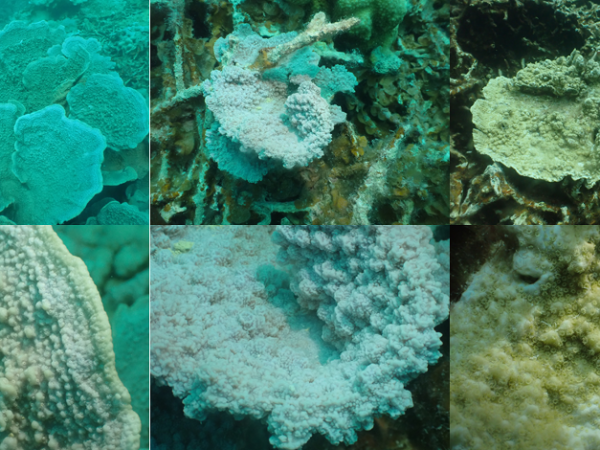
Author: Andrew Baird The Blue Holes at the southern end of the Cocos Island Lagoon seem to be a particular rich habitat in terms of novel species with potentially three new Montipora species (Fig. 1). The Blue Holes are a highly unusual habitat and very prominent in the lagoon when viewed on Google Earth. The holes are mostly circular and range in size from 10s to 100s of metres in…

Acropora protoeiformis (Saville-Kent, 1897)
Author: Andrew Baird Nominal species: Madrepora protoeiformis Saville-Kent, 1897 One of the more distinctive corals on the reefs of Ningaloo (Western Australia) is Acropora protoeiformis originally described by Saville-Kent in 1897 in his classic travelogue “The Naturalist in Australia”, with his characteristic flourish: “To return to the subject of the Abrolhos corals, there was one form … notable for its…

Boninastrea boninensis, Yabe and Sugiyama 1935
Author: Andrew Baird Species: Boninastrea boninensis, Yabe and Sugiyama 1935 This almost mythical coral has only been collected twice according to Corallosphere; once at the type location in the Ogasawara Islands (also known as the Bonin Islands) and once in Indonesia. The Ministry of the Environment in Japan has formally classified it as extinct. The…

Acropora tanegashimensis Veron, 1990
Author: Andrew Baird Species: Acropora tanegashimensis Veron, 1990 Acropora tanegashimensis was named by Veron for a species of table coral from Tanegashima, a subtropical island just south of Kyushu and the site of the northern-most coral reef in Japan. There has long been some confusion as to how to identify this species in the field. The…
The peculiar case of Porites spumosa Lamarck, 1816
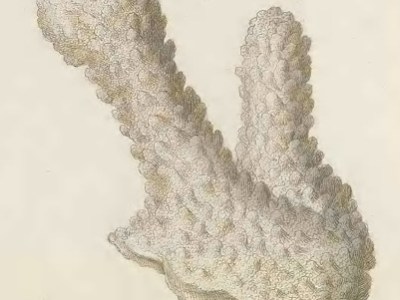
Author: Andrew Baird Species: Porites spumosa Lamarck, 1816 Porites spumosa was described by Lamarck in 1816. In his original description, he refers to a drawing in Knorr (1772; Plate 1A, Fig. 4; reproduced in Fig. 1c in present article). Lamarck (1816) also describes details of the specimen that are not apparent in the drawing, so it is likely…

Acropora teres
Author: Andrew Baird Species: Acropora teres (Verrill 1866) This species has confounded coral researchers for many years. The holotype (Fig. 1a) was collected from Amami-Ousima Island in the Ryukyus Archipelago in Japan in 1856 on the US Northern Pacific Exploring Expedition and described as Madrepora teres by Verrill in 1866. The distinctive features of the species are…

Montipora albanesei
Author: Andrew Baird Species: Montipora sp. “albanesei” Project Phoenix members are in the field chasing topotypes and discovering new species. Yesterday, while in the lagoon of Cocos Keeling Island, we came across fields of Montipora including at least 3 species we have never seen before. If these do turn out to be new, we plan to call…

Plesiastraea proximans
Author: Andrew Baird Species: Plesiastraea proximans Dennant, 1904 The use of types in taxonomy does present some problems. For example, in many older works the catalogue number of the specimen on which the species description was based is not listed, and in some situations it is not even clear which museum the specimen was deposited…

Pavona duerdeni
Author: Tom Bridge Species: Pavona duerdeni Vaughan 1907 Pavona duerdeni is regarded as a distinctive species. The intricate thamnasteroid (or ‘star-shaped) corallites (see Rosen 1986) of this species clearly identify it as a member of the family Agariciidae, but the most distinctive feature of the species, at least as interpreted in recent decades (e.g. Veron…

Acropora torresiana
Author: Andrew Baird Species: Acropora torresiana Veron 2000 One of the many difficulties in sorting coral taxonomy is the often contradictory information attached to the type material. For example, Acropora torresiana was officially named by Charlie Veron in 2000 with the type location given as the “Torres Strait”. Also complicating the issue is the fact…

Blastopathes medusa
Author: Jeremy Horowitz Species: Blastopathes medusa Horowitz 2020 This large (> 1 m tall) and strange yet elegant and mythology-inspiring black coral is the newest addition to the Order Antipathidae. This species is described from, and dominates sandy habitats situated adjacent to patchy shallow and mesophotic coral reefs in Kimbe Bay, Papua New Guinea. The…
Micromussa lordhowensis
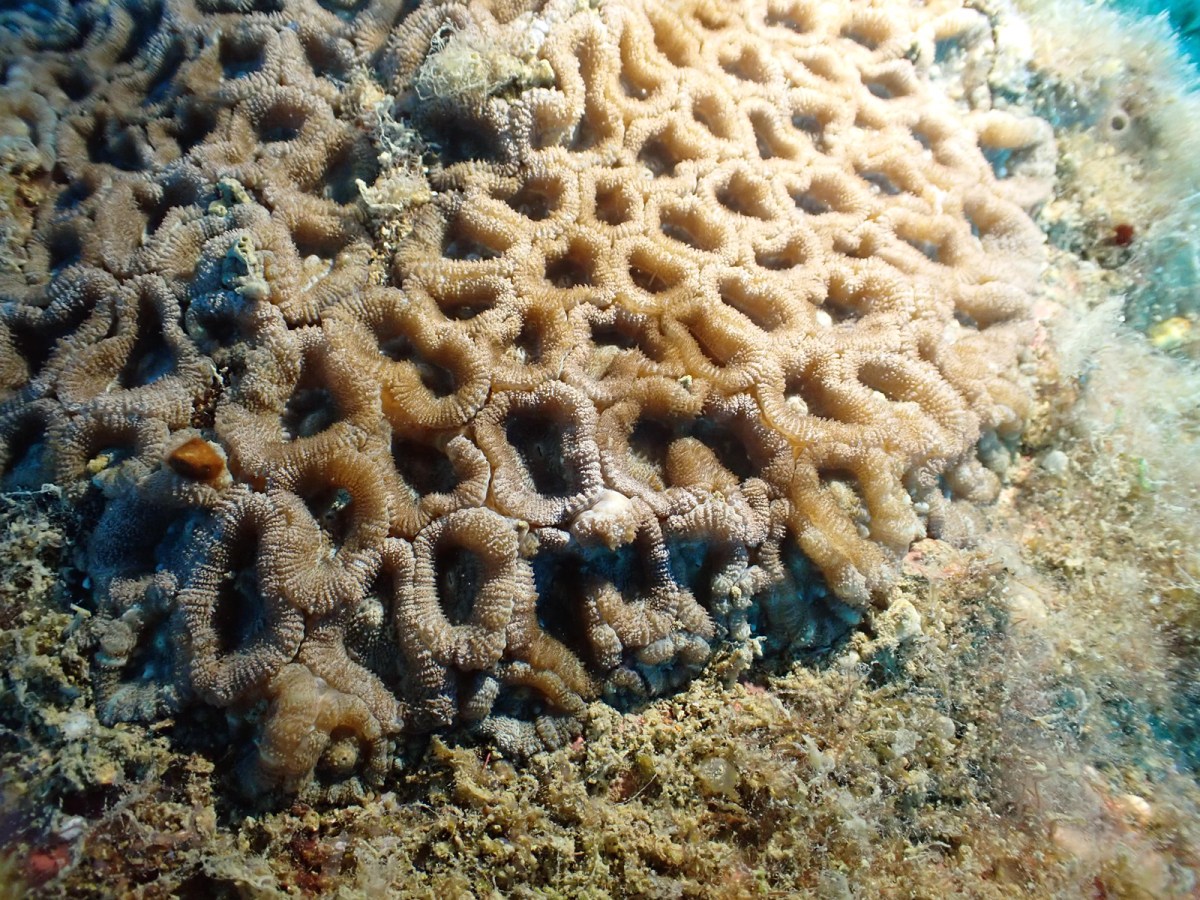
Author: Andrew Baird Species: Micromussa lordhowensis (Veron and Pichon 1982) This a striking beautiful coral, with brightly coloured large fleshy tentacles that puff up during the day making the corallum appear plocoid, however, they retract when touched to reveal the ceroid arrangement of the corallites. This species was initially placed in the genus Acanthastrea (Veron…
 Project Phoenix