Author: Augustine Crosbie
Nominal species: Acropora kalindae Crosbie, Baird, Bridge & Rassmussen, 2025
Not every species discovery begins with exploring the unknown. Sometimes it begins with realising that something familiar is not what it was thought to be. The newly described species Acropora kalindae Crosbie, Baird, Bridge & Rassmussen, 2025 described in Rassmussen et al. (2025) was for decades mistakenly called Acropora anthocercis (Brook, 1893), despite a morphology that was very different to Brook’s lectotype NHM 1892.6.8.235, collected by William Saville-Kent from the Palm Islands near Townsville, Australia (NHM = Natural History Museum, London, UK). Its formal recognition and description combine a re-examination of type material, dozens of specimens in the Queensland Museum Tropics collection, genetic data, and careful field observations to solve a long running case of mistaken identity.
The species itself
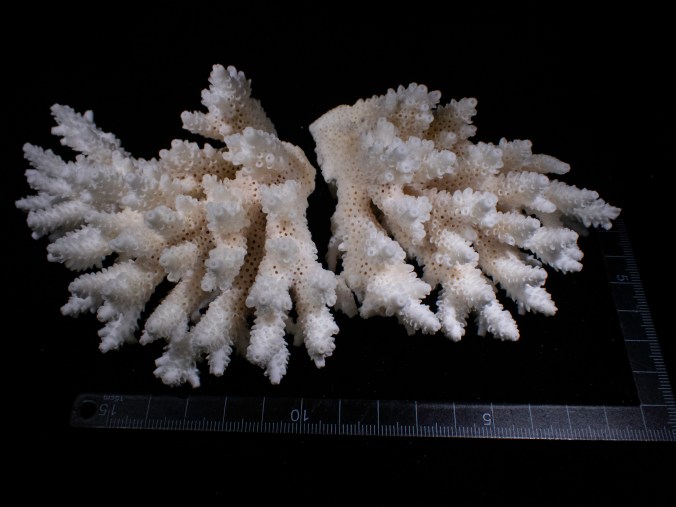
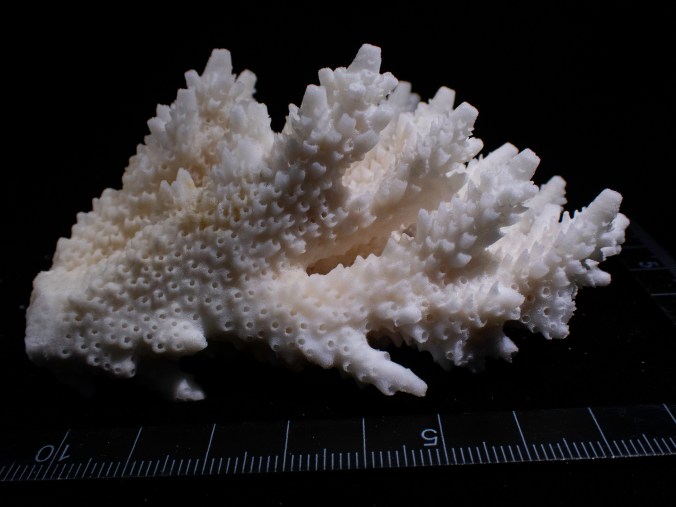
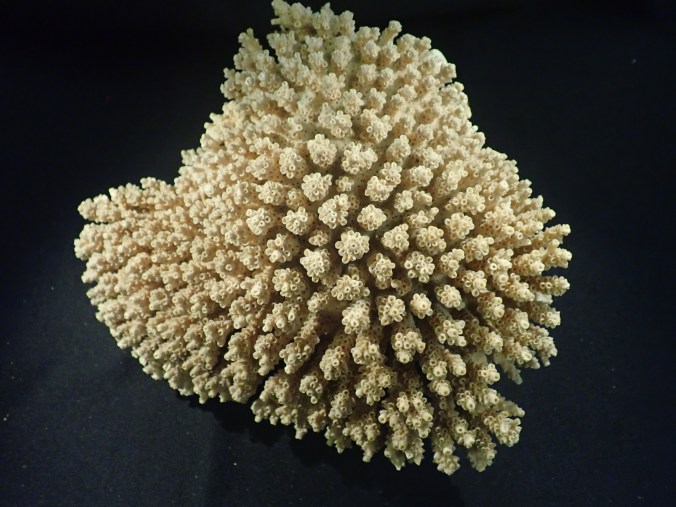
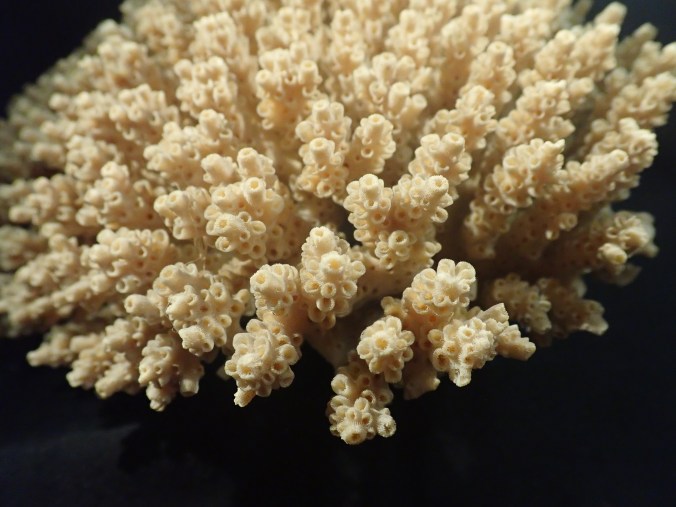
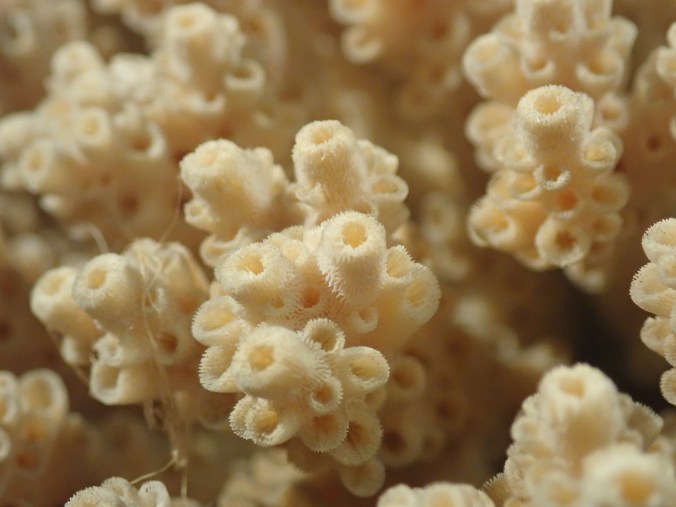
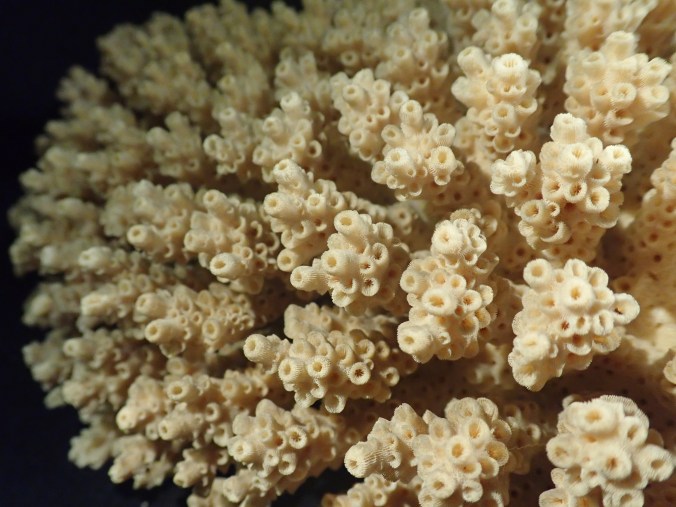
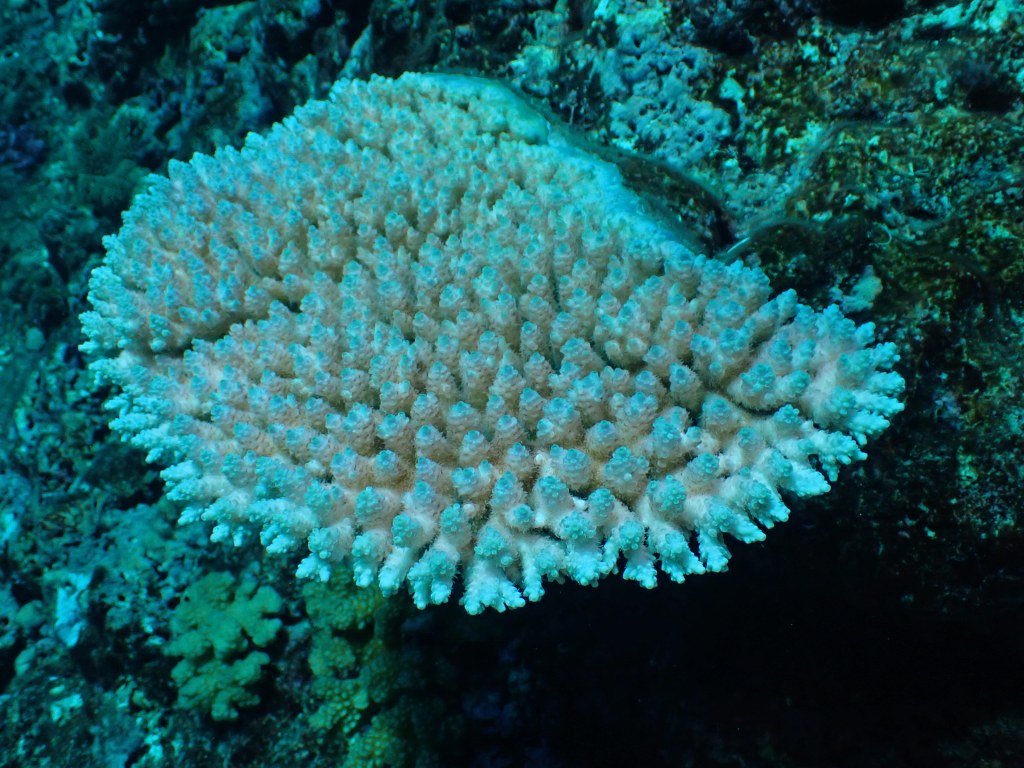
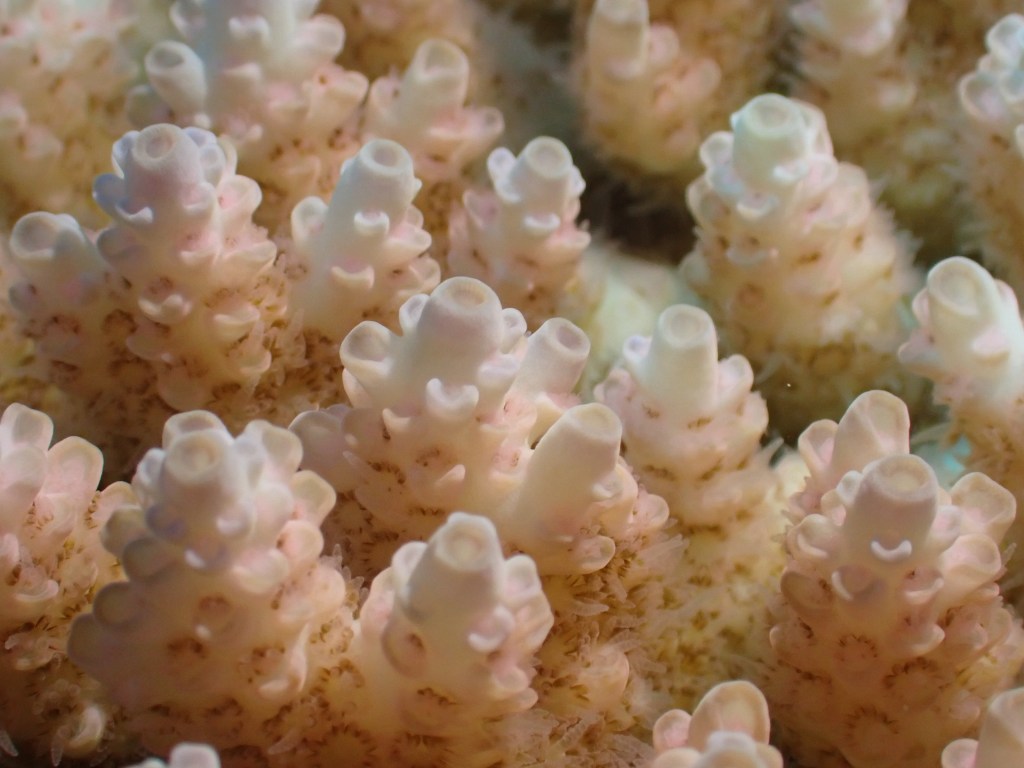
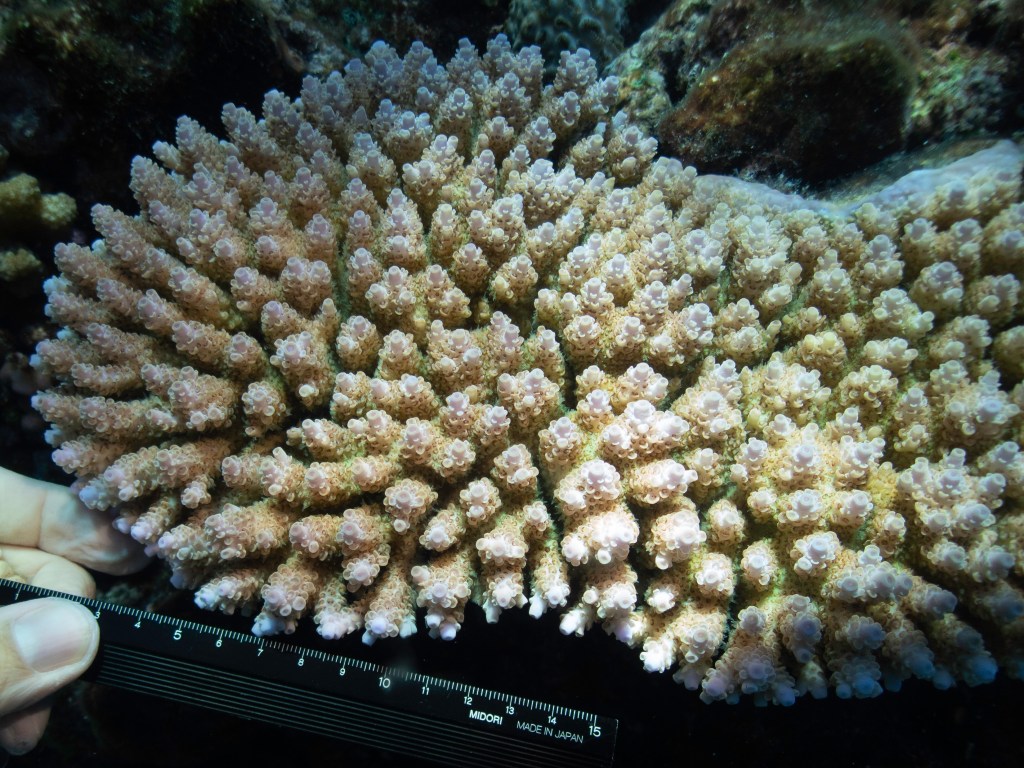
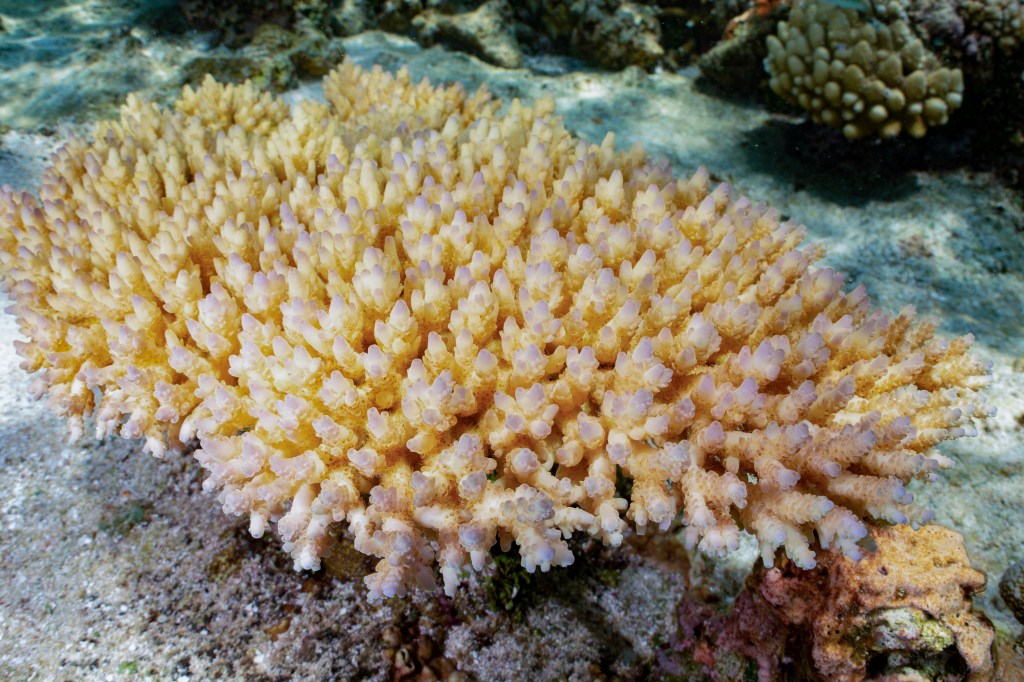
The holotype of A. kalindae (collection number QMT G78731) is a fragment of a larger colony growing at 5 m depth on the outer reef crest of Myrmidon Reef, which is located on the outer GBR north-east of Townsville. This colony is a side-attached plate with dense branches that fuse towards the colony centre. The colour is a pale pinkish-brown, which comes from contrasting colours of the axial / radial corallites which are pale pink to cream, and the polyps that are a darker brown (Figure 1). At the time of collection in daylight hours, the tentacles of the polyps were partially extended, and each polyp had a single long, semitransparent directive tentacle.
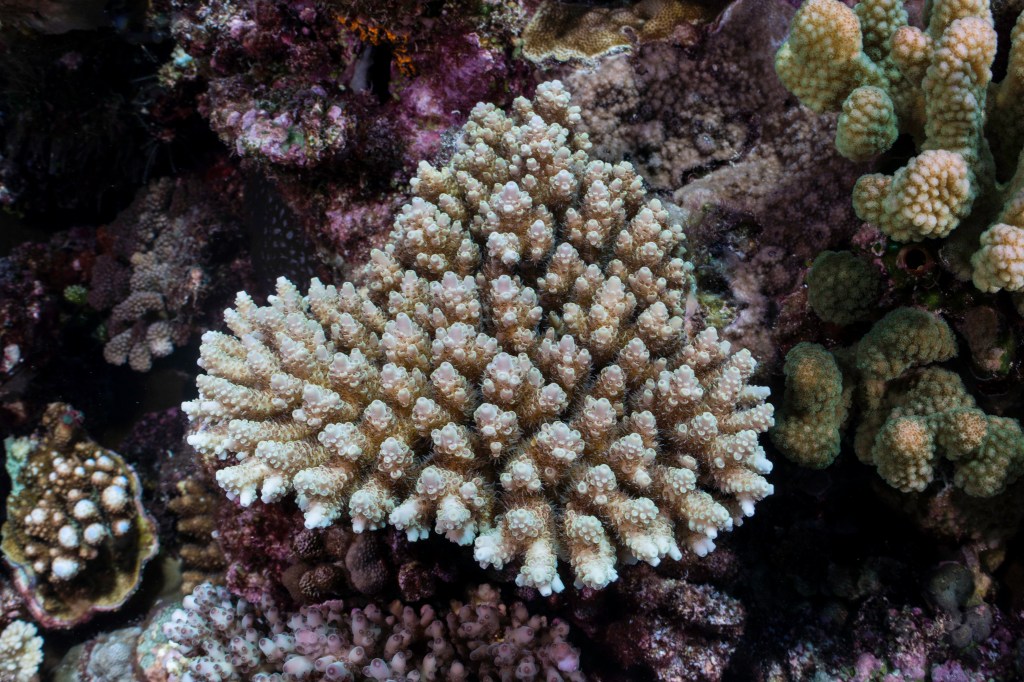
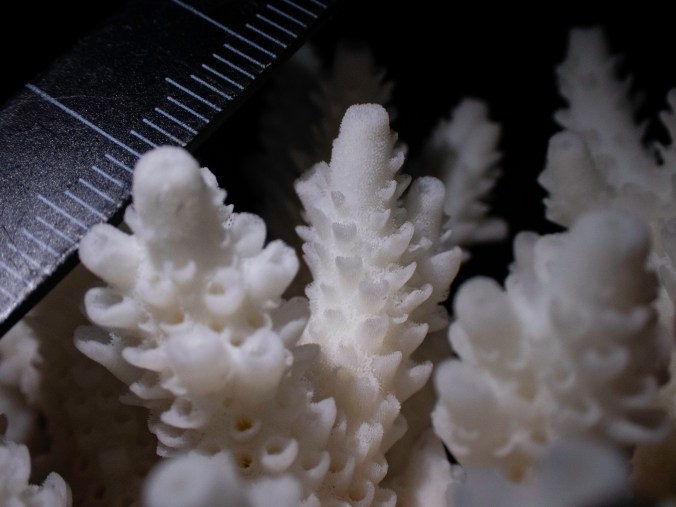
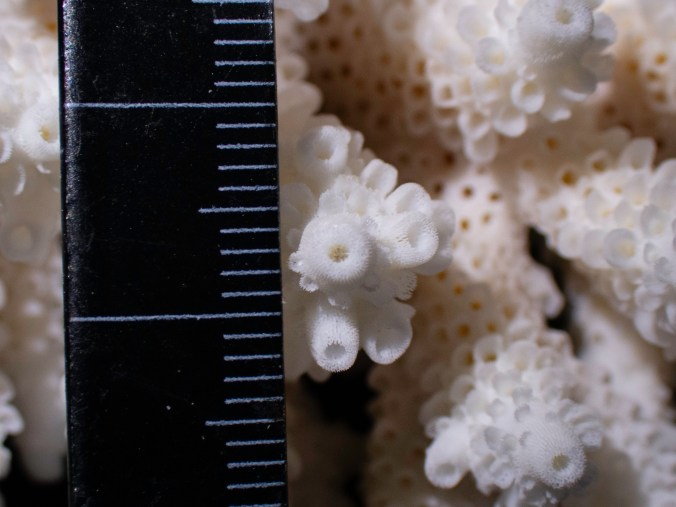
When considering the morphology of the holotype with additional samples that cluster together genetically, we can give an overall description of A. kalindae in the wild (Figure 2). The species is recognisable through a combination of its plate-like growth form and the distinctive shape and arrangement of the axial and radial corallites. The axial corallites are conical and there are often multiple axials per branch, and the radial corallites are primarily labellate (lip like). The branches also have a strong taper. Based on our samples and those housed at QMT, the species appear to be most abundant on outer-shelf reefs of the GBR, particularly in the far northern GBR but also at Myrmidon Reef, and is rare on mid-shelf reefs. All of the specimens in the QMT collections we could confidently identify as A. kalindae were from the GBR, although field images indicate the species also occurs in the western Coral Sea.
The confusion surrounding A. anthocercis
Acropora anthocercis was described by George Brook in 1893 from series of samples collected from the GBR. The species was originally described as Madrepora coronata by Brook (1892), but as this name was applied to a different species by Rehberg (1892), Brook provided the new name M. anthocercis in his 1893 monograph. From Brook’s series of samples, Wallace (1999) designated a lectotype for A. anthocercis, collected from the Palm Islands, which is a digitate colony with terete branches approximately five millimetres in diameter. Its axial corallites are tubular, two to three millimetres wide and about four millimetres exsert. The radial corallites are predominantly nariform, appressed tubular or tubular with rounded openings.
The confusion surrounding the species description and its usage in field guides emerged almost a century after Brook’s description when the name A. anthocercis was re-applied to a very different growth form. Working with samples collected from the GBR, Veron and Wallace (1984) interpreted Brook’s species as a plating coral with tapering branches, large and conical axial corallites and labellate radial corallites. Although this interpretation was widely adopted, it does not match any specimens in Brook’s type series, which all have terete branches, tubular axials and nariform or appressed tubular radials.
The colonies Veron and Wallace collected, which we now recognised as A. kalindae, share only one notable feature with A. anthocercis: the presence of multiple incipient axial corallites on the tips of some branches. This superficial similarity likely contributed to the long-standing application of the wrong name, despite the substantial differences in both branch and corallite shape. Indeed, the name A. anthocercis has been applied to numerous distinct species on the basis of this one character.
Etymology and the significance of the MV Kalinda
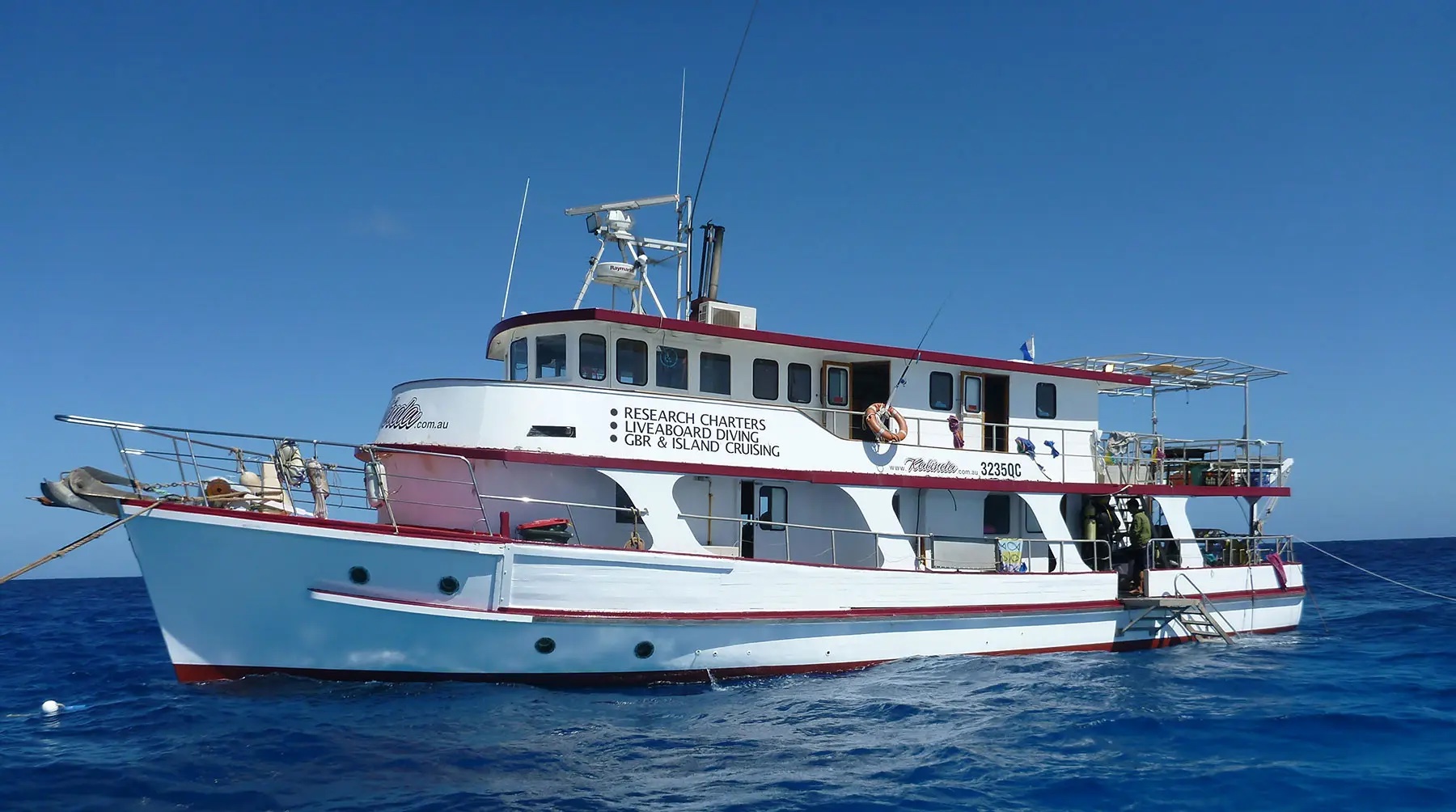
The name A. kalindae honours the MV Kalinda, a vessel with a long-standing association with marine science on the GBR. Launched in 1973 and built of spotted gum in Brisbane, she began as a CSIRO research vessel and contributed to early mapping surveys in the far northern GBR. This included important work that helped establish the Gulf of Carpentaria prawn fishery by running “try-gear” from a tractor mounted on the back deck to sample the catch.
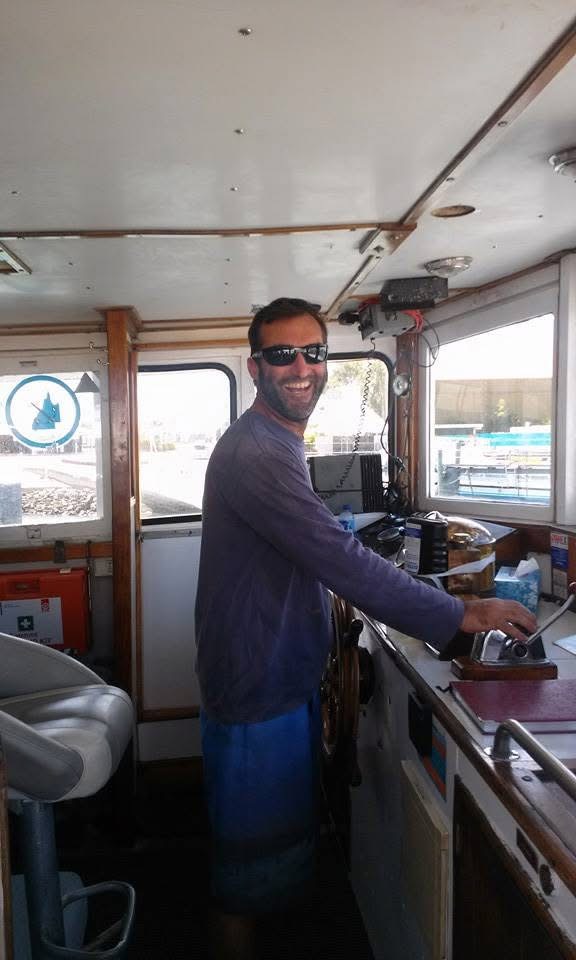
After leaving CSIRO in the late 1970s, she became a Townsville based charter vessel used by liveaboard diving operators. In the 1980s, the vessel was purchased by Prodive Cairns, fitted with upper deck cabins and spent more than a decade running regular diving expeditions to offshore reefs. Following a brief period in Victoria, MV Kalinda was bought by her current skipper David “Stewey” Stewart in 2005 and returned to Townsville and the GBR. Under Dave’s stewardship she has remained in active service and continues to operate across the GBR, from the Capricorn Bunker Group up to Torres Strait.
Over the past two decades, Dave and the MV Kalinda have provided access, logistical support and safe working conditions for numerous university groups and research teams, including many from James Cook University. The Kalinda has carried generations of students and scientists on their first encounters with offshore reefs. The data for much groundbreaking research was collected on the Kalinda, including source data for papers published in premier journals such as Science and Nature. The vessel has also been used for the expeditions that have resulted in the collection of numerous type specimens for new species described by Project Phoenix, including Acropora tenuissima Bonito, Bridge Fenner & Baird, 2024, A. tersa Rassmussen, Bridge & Baird, 2025, A. kalindae Crosbie, Baird, Bridge & Rassmussen, 2025 and the black coral Antipathes morrisi Horowitz, 2022. For many JCU trained marine biologists Dave and the Kalinda are an important part of their early experience of the GBR. Naming this species after the vessel acknowledges not only the Kalinda’s tremendous contributions to reef science but also the steady and generous support provided by her skipper, whose commitment to marine research has enabled countless projects, and shaped the lives and careers of many people who study the Great Barrier Reef.
Anecdotes of the Kalinda from the authors
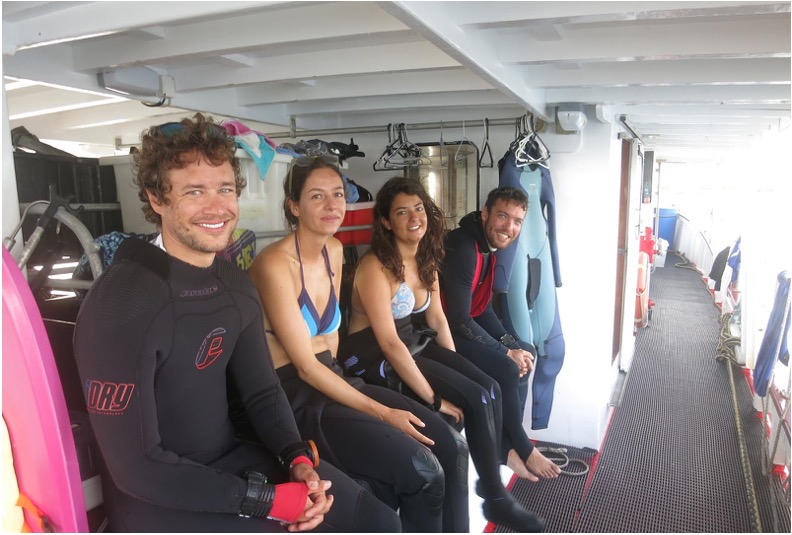
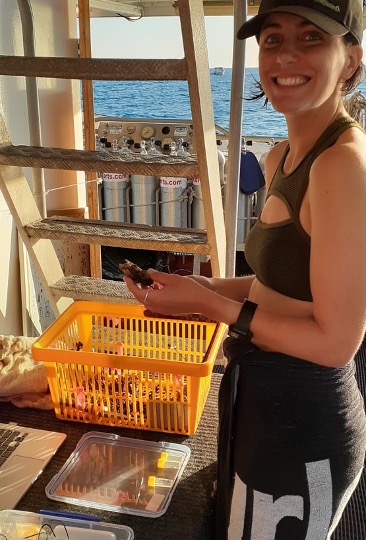
Augustine Crosbie – I have a personal connection to the Kalinda. It was the first vessel I dived the Great Barrier Reef from, and I worked for Dave as a member of her crew for much of my academic education in Townsville. During that time, I visited hundreds of reefs, trained many divers, and gained experiences and skills that shaped my career. It was also during one of these trips that I met my wife, and we have since spent many trips diving and conducting science on the Kalinda together.
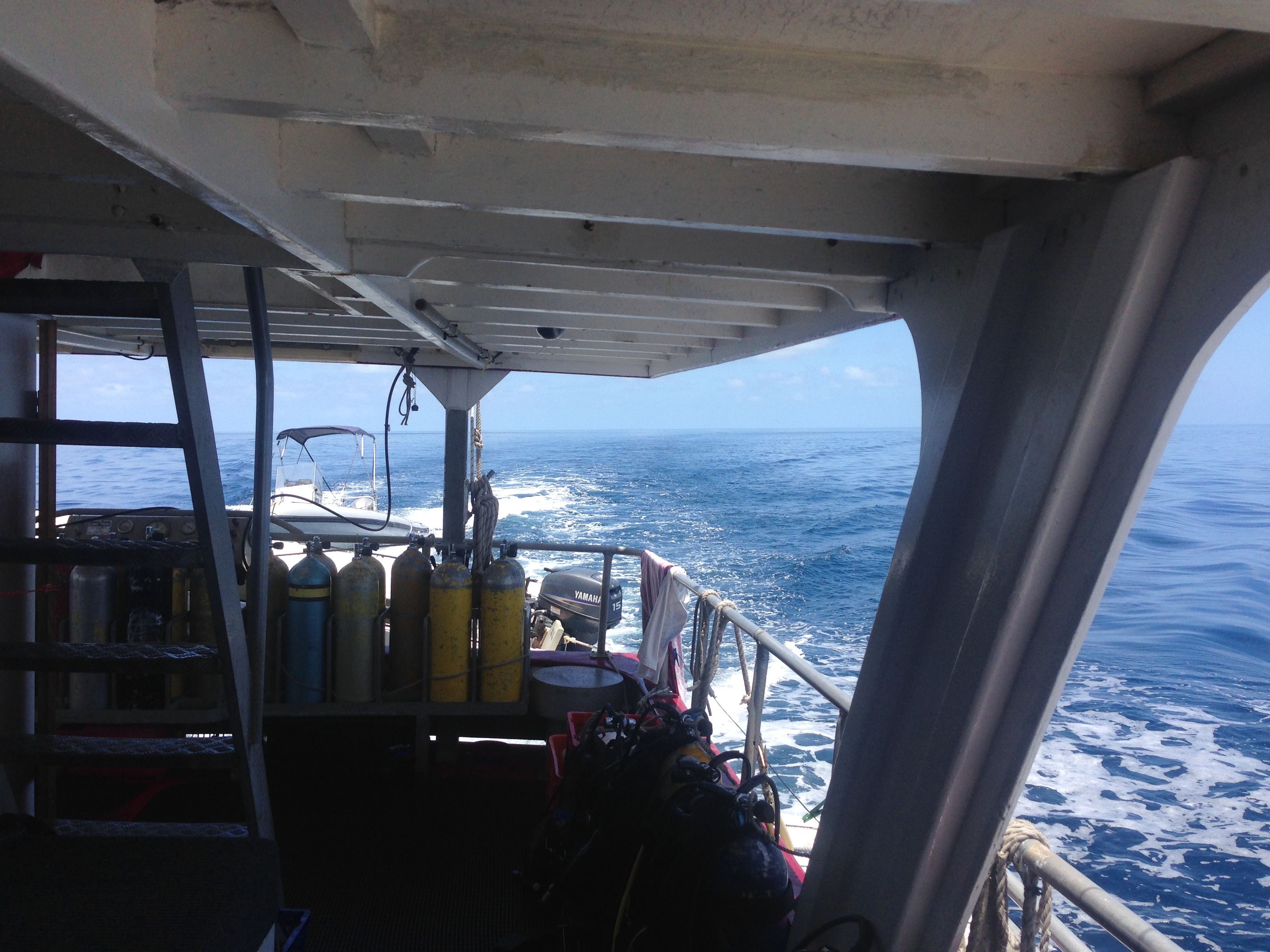
There are far too many experiences to recount here, but one of my more memorable moments on the Kalinda was during a trip to the far northern GBR. Towards the end of the voyage we encountered doldrum conditions, and with temperatures at night often well above 30°C we would often sleep under the stars on the back deck. During one of these nights, I woke to the sound of whale beaths. Far from land and with the full moon in the sky, the ocean was cast in a silver light, and together my wife and I quietly watched as a group of whales slowly passed the Kalinda at anchor.
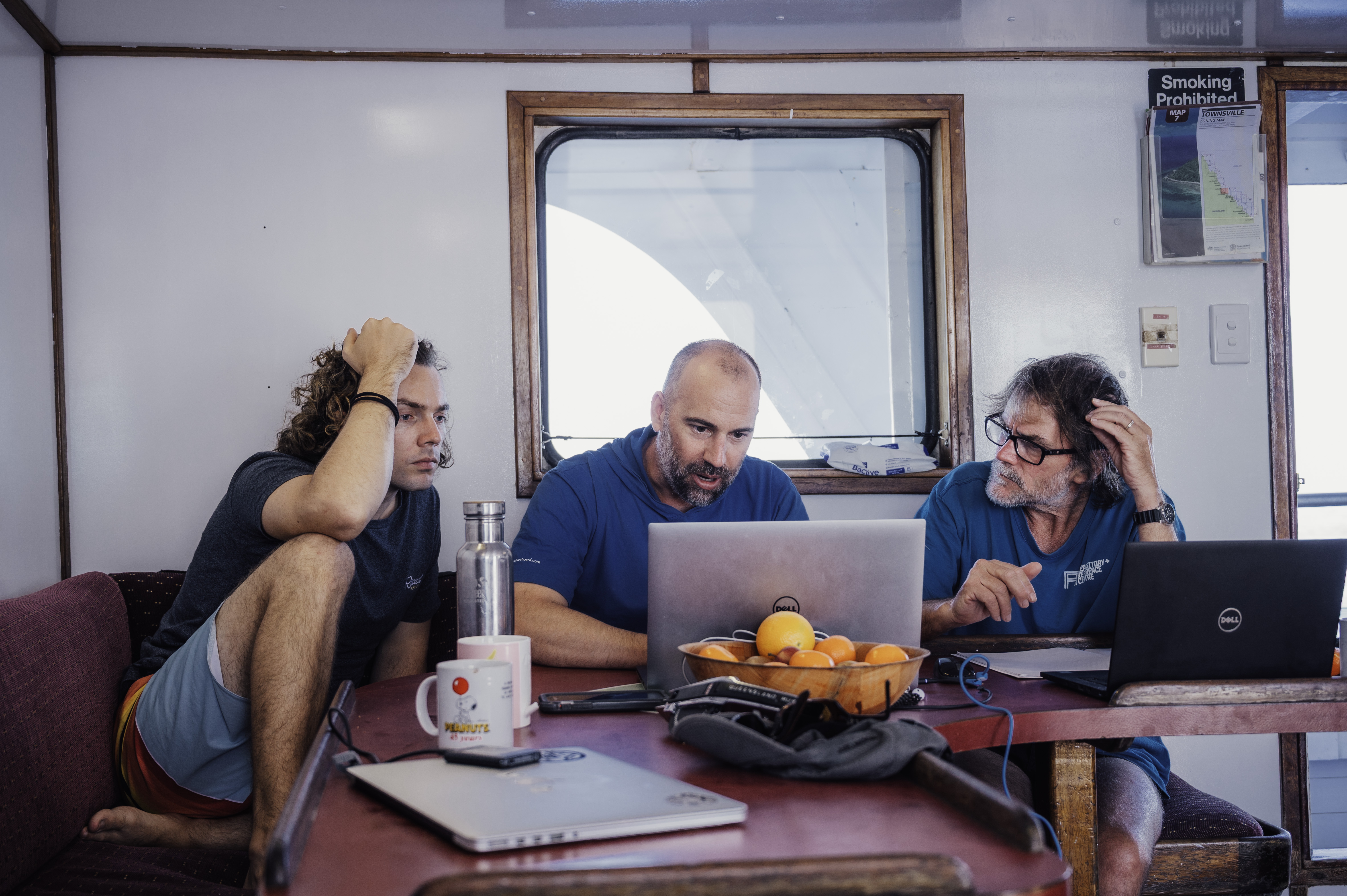
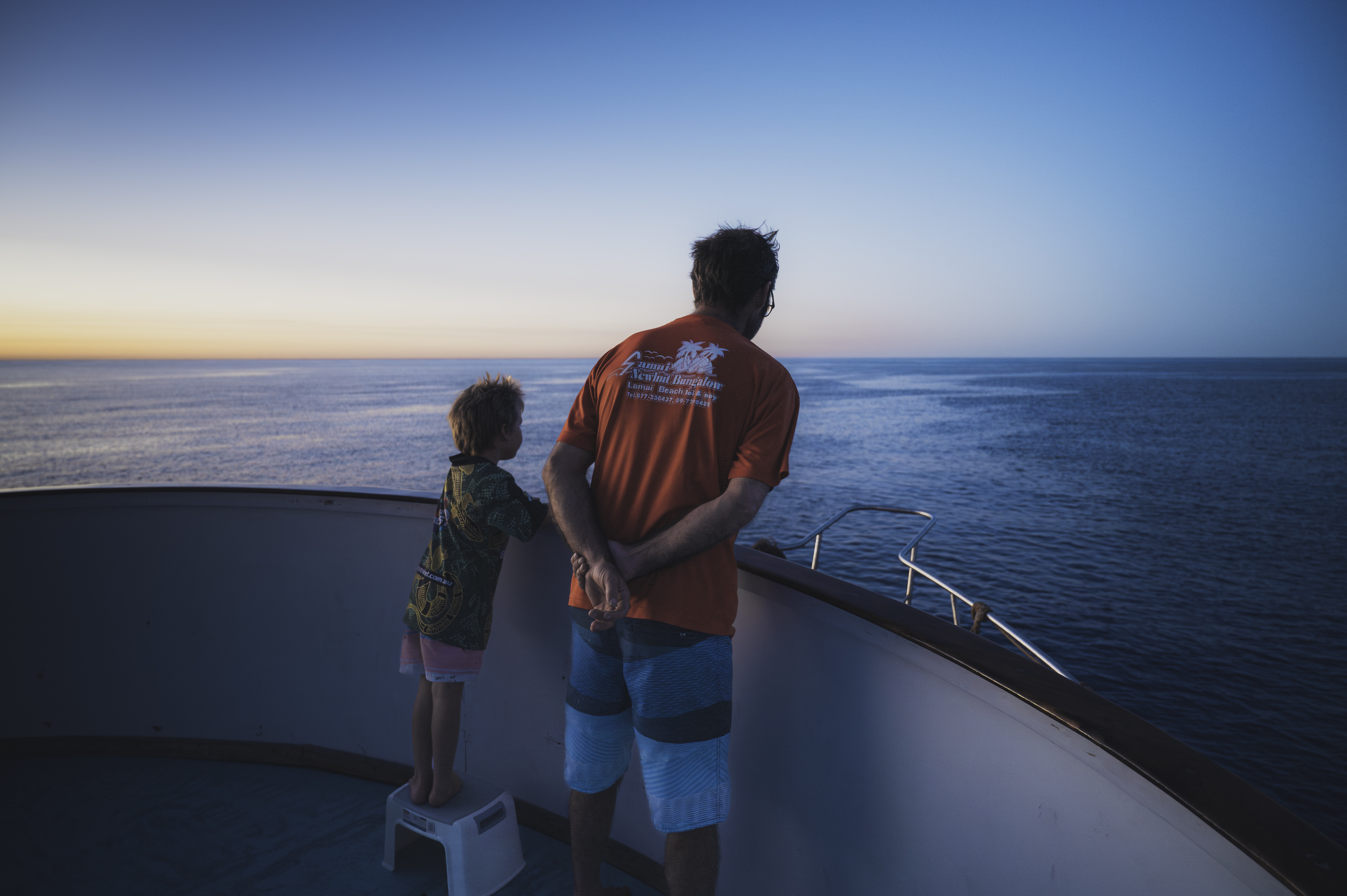
Andrew Baird – Every voyage on the Kalinda has been memorable, however, a few do stand out. The first was a 12-day trip from Townsville to Thursday Island in April 2016. The primary aim of the trip was to document the scale and severity of the mass bleaching that occurred in early 2016, however, other data collected on the trip contributed to the PhD theses of Tory Chase and Tullia Terraneo. The camaraderie and sense of purpose on the trip was unparalleled. The trip also had a decidedly family affair because Stewey had his young son Lochlan and his niece on board. While we saw a lot of dead and dying corals on the trip we also visited some of the most remote and healthy reefs on earth. The underwater life on Great Detached Reef is unlike anything I have seen elsewhere.
Another stand out trip was one that we all recall fondly as the “Voyage of the Kalinda” in 2019. This was one of the first dedicated collecting trips for Project Phoenix. Over the course of 28 days, we steamed the length of the GBR, from Gladstone to Thursday Island, again visiting some of the most isolated and most incredible reefs I have seen. One surprise was the quality of life on the western edge of the mid-shelf reefs off Mackay. It is another world down deep, down there. In the course of the Voyage we collected over 1000 corals which now serve as the material for the dozens of new species that we promised (e.g. Bridge et al 2024; Rassmussen et al. 2025). A huge thanks to Stewey and the crew of the Kalinda for some of the most fulfilling and fun times of my life.
Sage Rassmussen – Recalling the 2019 “Voyage of the Kalinda”, I remember the sway of the ocean lending itself to long sleepless nights and sea sickness, instantly forgotten upon enjoying a cup of freshly ground coffee and an early morning collection dive. Thinking back, I picture Dave returning from a swim with trout for dinner, nights playing Catan, and friendships formed over a passion for discovery and science.
Literature Cited
Brook G (1892) Preliminary descriptions of new species of Madrepora in the collections of the British Museum. Part II. Annals and Magazine of Natural History (Ser 10) 451–465
Brook G (1893) The genus Madrepora. Catalogue of the Madreporarian Corals in the British Museum.
Rassmussen SH, Cowman PF, Baird AH, Crosbie AJ, Quattrini AM, Bonito V, Sinniger F, Harii S, Cabaitan PC, Fadli N, Tan C-H, Hung JY-H, Rongo T, Huang D, Halafihi T, Bridge TCL (2025) The tables have turned: taxonomy, systematics and biogeography of the Acropora hyacinthus (Scleractinia: Acroporidae) complex. Invert Systematics 39:NULL-NULL
Rehberg H (1892) Neue und wenig bekannte Korallen. Abhandlungen aus dem Gebiete der Naturwissenschaften Hamburg 12:1-50.
Veron J, Wallace C (1984) Scleractinia of Eastern Australia – Part V. Family Acroporidae. Australian Institute of Marine Science Monograph Series 5:1–485
Wallace C (1999) Staghorn Corals of the World: A Revision of the Genus Acropora. CSIRO Publishing,
 Project Phoenix