Author: Andrew Baird
Last year in July, I visited the Houtman-Abrolhos (HAI) with Dr Kate Quigley and colleagues to collect coral samples for a number of different projects including Kate’s ARC DECRA project looking at the potential for corals to adapt to climate change (Quigley et al. in press), Charlotte Dale’s PhD project on the Acropora of the Indian Ocean and Project Phoenix’s hunt for topotypes and novel species.
The Houtman-Abrolhos is of considerable interest for many reasons. It has a dark human history, being the site of the wreck of the Batavia (Stanbury 1993) and is also of great ecological significance as a biogeographical transition zone between tropical and sub-tropical marine communities (Johannes et al. 1983).
The HAI is also an important site for Project Phoenix’s mission to develop a robust and global coral taxonomy as it is the type location for 11 nominal species, 8 valid, 1 junior synonym and 2 of uncertain status. These include putatively common and widespread species such as Acropora abrolhosensis (Veron 1985), Montipora crassituberculata (Bernard, 1897) and M. australiensis (Bernard, 1897). The first collections in the HAI were done by Saville-Kent in the 1890s, who wrote vividly on the biology of the islands and also described one species from the HAI, A. proteoformis (Saville-Kent, 1897). JEN Veron also visited the islands in the 1980s and described 6 species from specimens he collected. Previous estimates of the species richness in the region range from 184 species (Veron and Marsh 1988) to 284 species (Veron et al. 2011).
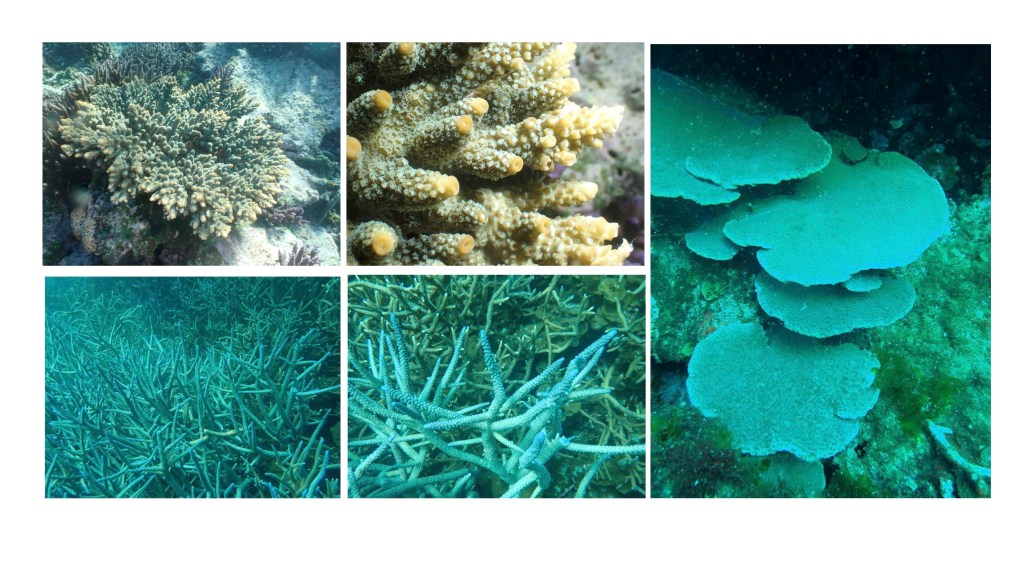
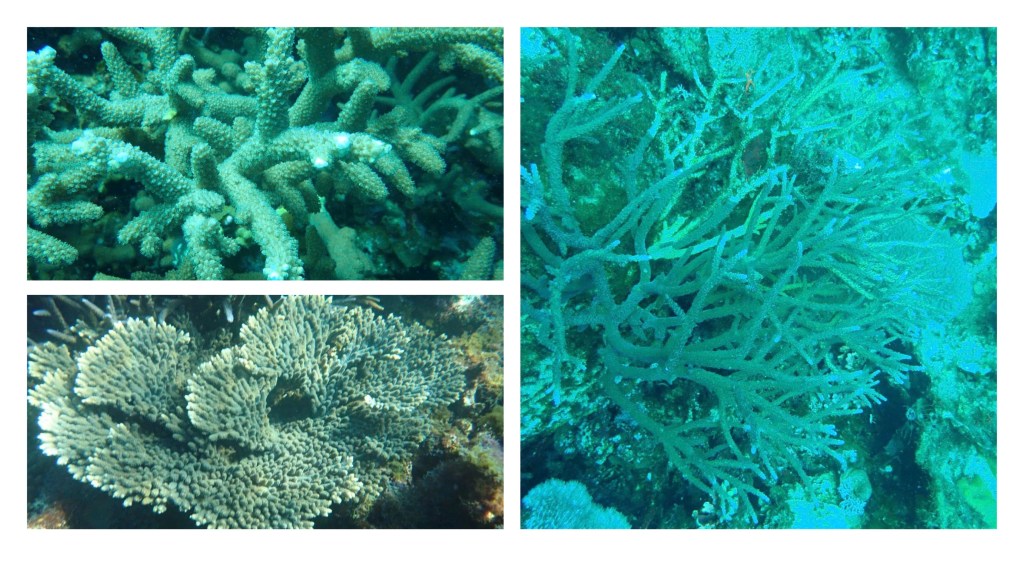
Project Phoenix has now collected over 250 specimens from the HAI during a trip in May 2018 and the current trip. We now have representatives of most of the 11 topotypes (Fig. 1 and see Crosbie et al 2026 for a complete list of HAI nominal species) but unfortunately, some continue to elude us, including M. crassituberculata. Based on preliminary molecular and morphological analyses, we estimate species richness in the HAI of between 80 – 90 species, some of which are likely endemic to south-western Australia (Fig. 2). For example, our unpublished molecular data, which includes coral samples from the World Heritage Listed Ningaloo Reef, Cocos-Keeling Island and Christmas Island suggest the eponymous A. abrolhosensis is only found in the HAI. Similarly, unpublished molecular data suggests that A. proteoformis is a valid species and mostly likely restricted to the HAI and Ningaloo Reef (although I have images of what could be A. proteoformis from Pulau Aceh in Indonesia).
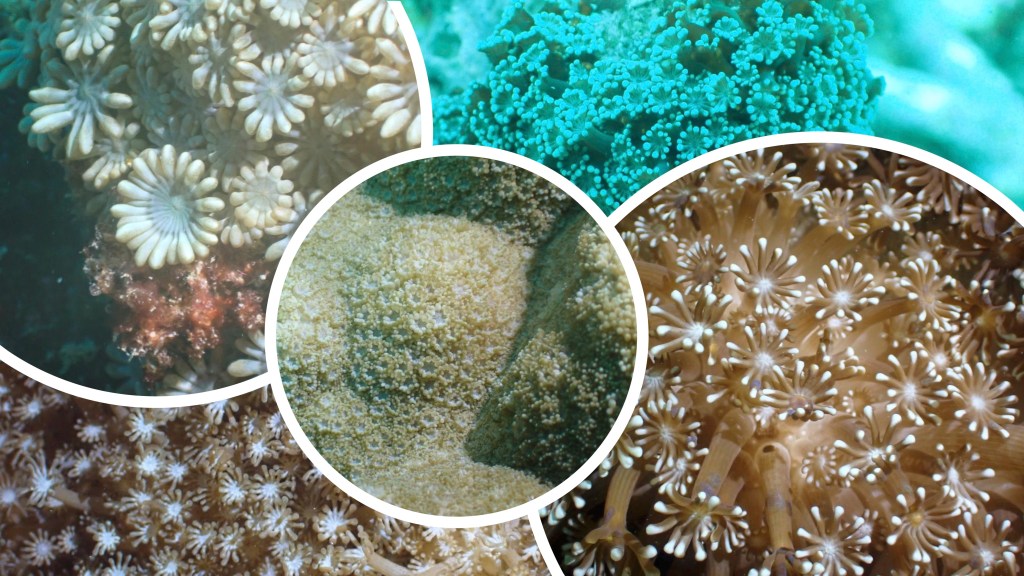
Other interesting features of the coral fauna include the fact that some common reef genera are missing or rare, including Isopora, Seriatopora, Stylophora and Turbinaria. Furthermore, genera that are typically uncommon and species poor in other regions are well represented in the HAI, in particular Alveopora (Fig 3).
Our estimates of species richness suggest that the most recent estimate of 284 (Veron et al. 2011) was somewhat energetic. While we have yet to collect in all the numerous and diverse habitats within the three main island groups that make up the HAI, it is difficult to see our numbers climbing much above 100 spp. This discrepancy between Veron’s estimates and others is not unusual (e.g. Rudi et al. 2012). Indeed, Veron estimates of richness are generally based on rapid ecological surveys rather than collections. Moreover, in many regions his estimates are based on the assumption of continuous distributions between points that might, or might not, have been surveyed.
Coral cover at the sites we visited in the HAI was almost invariably exceptionally high. It is rare these days to see such an abundance of corals. Many modern reefs are coral graveyards, but the HAI gives one a feel for what reefs would look like if it weren’t for humans and some hope for what might be if we can address global warming and other human sources of stress. Coral cover regularly exceeded 80% and patches of high coral cover extend for 100s of metres, if not kilometres.
Nonetheless, all was not rosy on the reef. A couple of sites we visited were clearly affected by previous marine heat waves, most likely in 2011 (Markey et al. 2016). For example, at Assail Bank, coral cover was less than 5%. Also, we saw very few sharks, apart from one majestic 3m tiger shark that cruised past our stern while at anchor in the Pelsaert Group.
Other highlights of the trip include snorkelling on the wreck of the Batavia, encounters with curious sea lions, diving surrounded by humpback whales, some great meals from the chef on the Keshi Mer II and the wonderful hospitality of Ale and Kate while I was delayed in Perth.
Acknowledgements
We thank the Yamatji Traditional Owners of the region for their support especially Kyra Lewis for her positive energy in the field. The trip was funded by the Jock Clough Marine Foundation and an Australian Research Council DECRA Fellowship to Kate Quigley. Kate also thanks Ale Siqueira and Lucas Lutzenkirchen for action above and beyond in the field.
Reference
Johannes RE, Wiebe WJ, Crossland CJ, Rimmer DW, Smith SV (1983) Latitudinal limits of coral reef growth. Mar Ecol Prog Ser 11:105-111
Markey KL, Abdo DA, Evans SN, Bosserelle C (2016) Keeping It Local: Dispersal Limitations of Coral Larvae to the High Latitude Coral Reefs of the Houtman Abrolhos Islands. PLoS ONE 11:e0147628
Quigley KM, Siqueira AC, Brereton K, Baird AH (in press) Empirical evidence of high organismal tolerance at a potentially climate-resistant reef. Curr Biol
Rudi E, Campbell SJ, Hoey AS, Fadli N, Linkie M, Baird AH (2012) The Coral Triangle Initiative: what are we missing? A case study from Aceh. Oryx 46:482–485
Saville-Kent W (1897) The Naturalist in Australia. Chapman and Hall, London
Stanbury M (1993) Historic Sites of the Easter Group, Houtman Abrolhos, WA. Department of Maritime Archaeology, Western Australian Maritime Museum 96
Veron JEN, Marsh LM (1988) Hermatypic corals of Western Australia. Western Australian Museum, Supplement no 29
Veron JEN, Turak E, DeVantier LM, Stafford-Smith MG, Kininmonth S (2011) Coral Geographic. Aust. Inst. Mar. Sci.

