A collaboration between Soneva Fushi Resort, Soneva Conservation & Sustainability and Project Phoenix by Andrew Baird
Andrew Baird and Charlotte Dale have recently returned from a collecting trip on Soneva Fushi in the Maldives. The Maldives are an important but poorly sampled area within the Indian Ocean and the coral fauna an important piece of the overall coral taxonomy puzzle. 248 extant hermatypic Scleractinia have been recorded in the Maldives (Pichon & Benzoni 2007). These include 35 species described from samples collected in the Maldives, including putatively widespread and common species such as Acropora intermedia, Pavona maldivensis and Leptoseris yabei. Twenty of these 35 species were synonymised in the 1970s & 80s prior to the use of modern integrated taxonomic approaches and one of the main goals of Project Phoenix is to revisit these synonymies using topotypes.
Hosted by Johanna, Ben, Ayla, Matty, Aisha and Alex of Soneva Conservation and Sustainability the aims of the trip were to
- Collect, curate and identify the Acropora fauna
- Collect, curate and test the validity of the 35 nominal species of the Maldives
Andrew and Charlie spent 4 days in the water, ably assisted by the team and many enthusiastic interns, collecting over 200 specimens and taking thousands of photos. A preliminary assessment of the collection suggests there are between 25-30 Acropora species in the waters around Soneva Fushi and between 120-130 spp in total. These specimens include 26 topotypes (Fig. 1) and almost certainly a few undescribed species (Fig. 2).
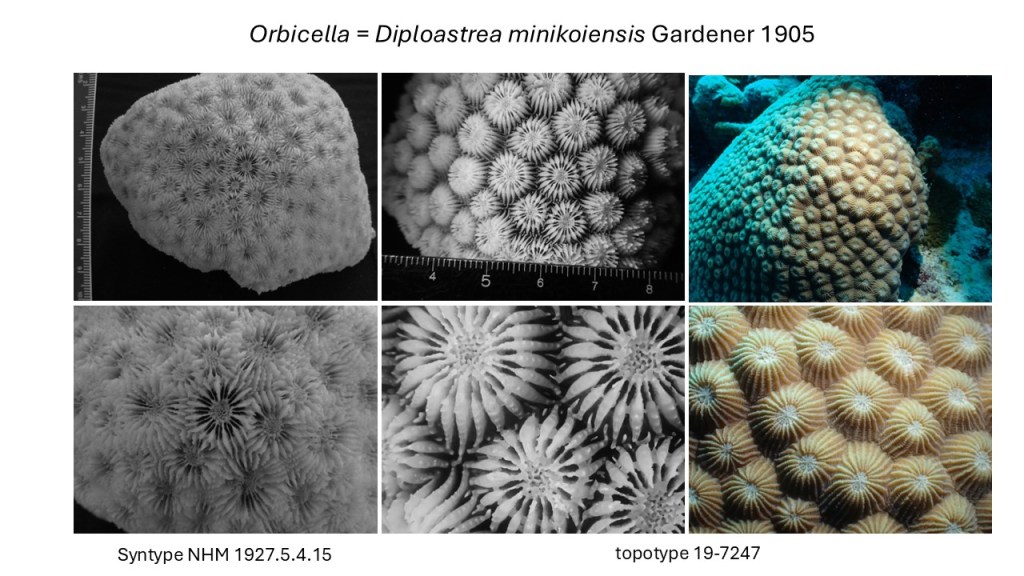
Figure 1. Topotype of Orbicella = Diploastrea minkoiensis Gardener 1904. Unpublished molecular data suggest there are at least two distinct lineages of Diploastrea and that therefore the synonymisation of D. minkoiensis with D. heliopora might be incorrect.
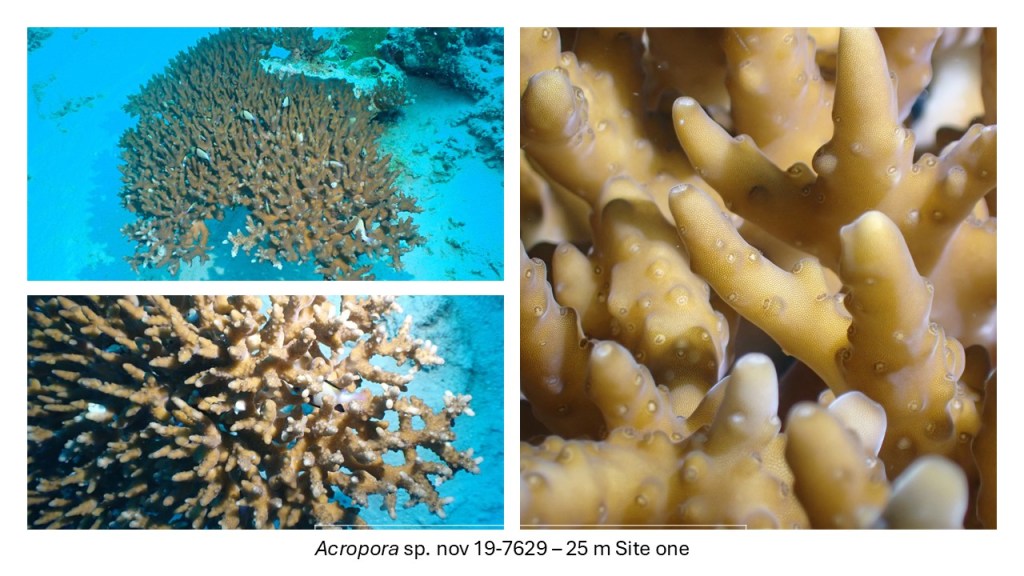
Figure 2 A potential undescribed species of Acropora on the reefs of Soneva Fushi
The coral fauna has some overlap with the Seychelles to the west and Aceh, Indonesia to the east, however, one preliminary conclusion is that at least some of these species are restricted to the central Indian Ocean. The next step, once we get the specimens back to Australia, is to sequence the specimens, include these sequences in phylogenies and compare the specimens to the type material to determine the identity of these species.
In addition to time underwater, Andrew presented his “Crash course in coral taxonomy” and Charlie present her preliminary analysis of the Acropora fauna of the Western Indian Ocean to the crew and interns
Andrew and Charlie also presented on the Coral Reefs of the Maldives to one of the local NGOs and recreational divers at the Kiha Beach Hotel, an event organised by Amanda Delaforce (link to Charlie’s travel note)
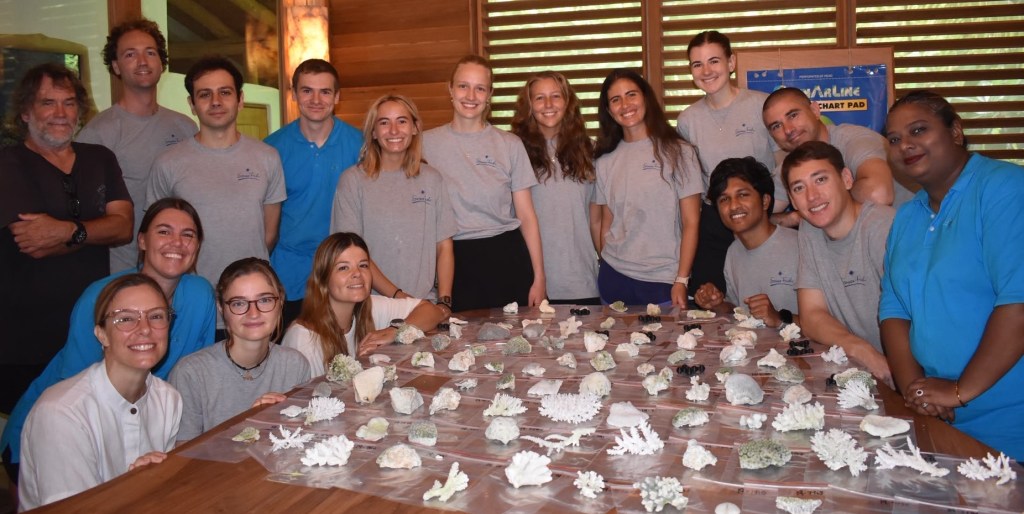
The Soneva Conservation and Sustainability Team. Back row from left to right; Andrew Baird, Rens Raggers, Lorenzon Romagnoli, Alex Barnes, Rose Clarke, Isabell Schniewind, Maddie Gladwin, Nikole Gualdron, Julia Rucker, Thushar Babu, Matty Forshaw, Ben Yuen, Aisha Naeem. Front row from left to right; Johanna Leonhardt, Ayla Kroon, and Liza Cantacuzene, Charlotte Dale
Acknowledgements: We thank Soneva Conservation and Sustainability, Soneva Fushi Resort and all the enthusiastic interns at the facility.
Pichon M, Benzoni F (2007) Taxonomic re-appraisal of zooxanthellate Scleractinian Corals in the Maldive Archipelago. Zootaxa:21-33

